
 Skip to content
Self-healing urethane film across the panels that actually take damage — hood, bumper, fenders, mirrors and headlights. Invisible when it is fitted properly, and the paint underneath stays factory-original for the life of the car.

Paint protection film is a clear, self-healing urethane layer applied over your paint. It absorbs rock chips, road rash and light scratches that would otherwise reach the finish. In Los Angeles the usual choice is a full front — hood, fenders, bumper, mirrors and headlights — because that is where freeway stone damage lands. Fitted with wrapped edges it is effectively invisible, and it removes cleanly years later without harming the paint beneath.
Spend an hour on the 405 behind a truck and your front end is being sandblasted. Grit lifted off the road at speed carries enough energy to punch through clear coat and into primer. Every one of those strikes is a permanent mark on a panel that costs four figures to repaint and gets disclosed the day you sell the car.
Paint protection film puts a sacrificial layer in the way. The strike still happens; it just happens to the film.
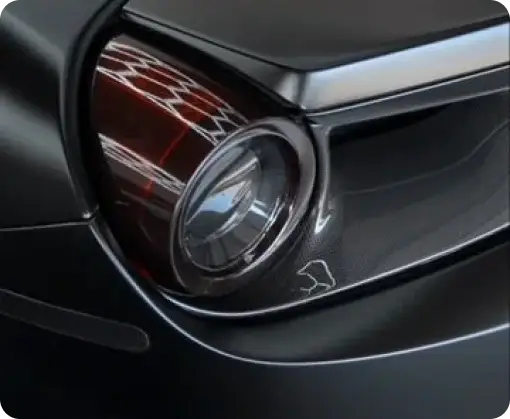
You do not have to wrap the whole car, and most people should not. Coverage is a decision about where damage actually happens versus what you are willing to spend. These are the four packages, weakest to strongest.
The leading 18 to 24 inches of the hood, the front section of each fender, mirror caps and headlights. It covers the highest-impact zone for the lowest outlay. The honest drawback is a faint horizontal line across the hood where the film ends, which becomes more visible over the years as protected and unprotected paint age differently.
The complete hood, complete fenders, front bumper, mirrors and headlights. No line across the hood because the film runs to the panel edges and wraps around them. This is the package most Los Angeles owners choose, and for a car driven on the freeway it is the point where the spend clearly justifies itself.
Full front plus rocker panels, A-pillars and the leading edge of the roof. Built for cars that see canyon roads, track days or a lot of high-speed miles, where debris is thrown further back along the body than normal commuting produces.
Every painted exterior surface, edges wrapped, much of the car disassembled so no cut line is ever visible. The right answer on a vehicle where paint condition drives resale, or where the color is expensive and difficult to match. Three to five days of work.
A new car looks identical with or without film. That is the point — done properly you cannot see it. What you see instead is the absence of a problem three years later: no stippled bumper, no chipped hood edge, no hazed headlamps.
When the film eventually comes off, the paint underneath is the paint that left the factory. The panels around it are not.

Most of the work happens before any film touches the car. Anything left on the paint is sealed under the film for a decade, so preparation is not a formality.
We go over the car in controlled light and record existing chips, scratches and any previous paintwork, so there is no argument later about what was already there.
A full wash, then chemical and clay decontamination to lift embedded iron, tar and industrial fallout that a wash alone leaves behind.
Machine polishing to remove swirl marks and light scratches. Whatever is not corrected now stays visible under the film for its full life.
Badges, lights and trim come off so film can be wrapped around panel edges rather than cut short of them. Patterns are plotted off the car, not bladed against your clear coat.
The film is set, edges are checked under raking light, and the car rests before collection. We tell you exactly how long to wait before the first wash.
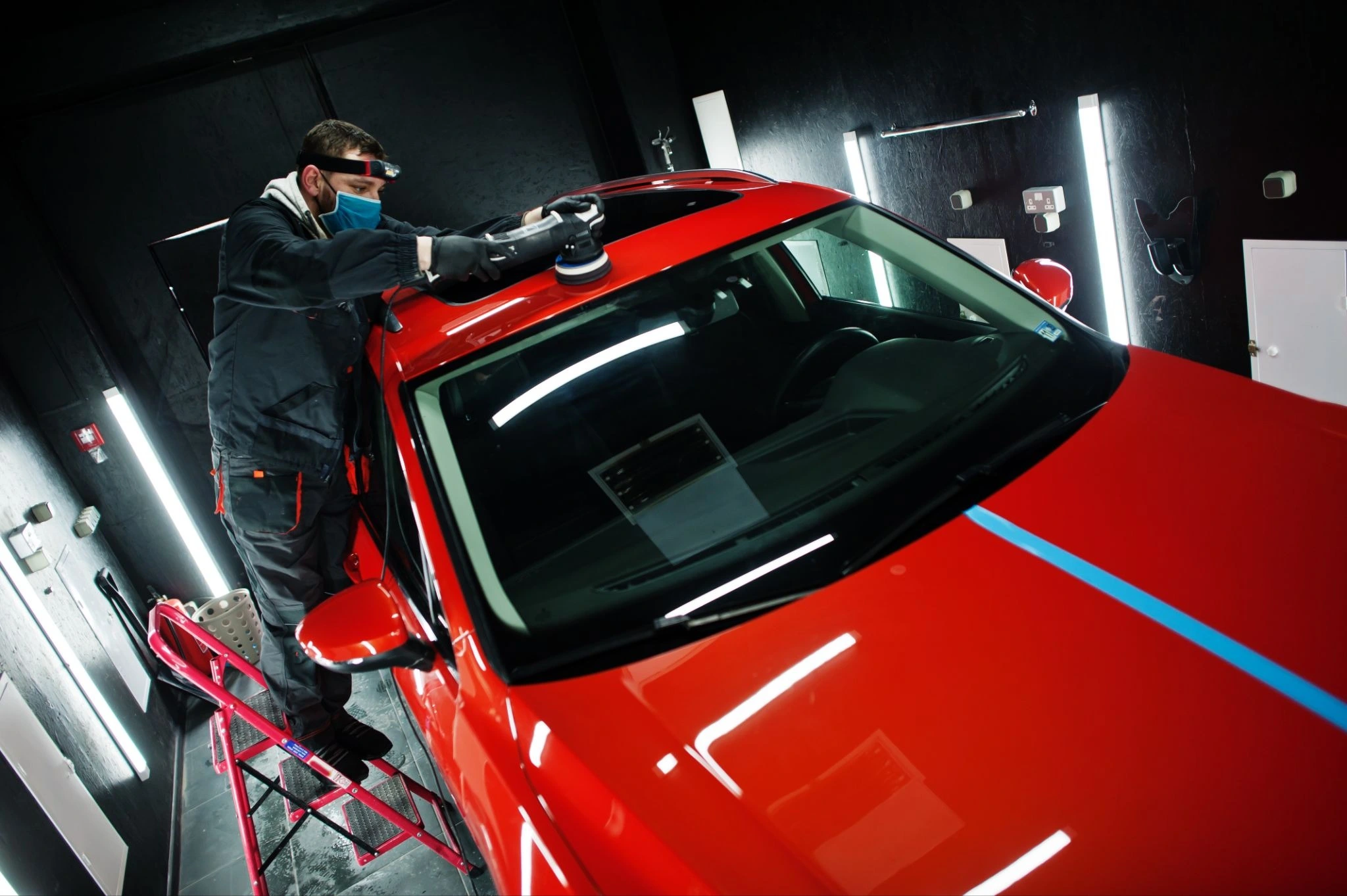
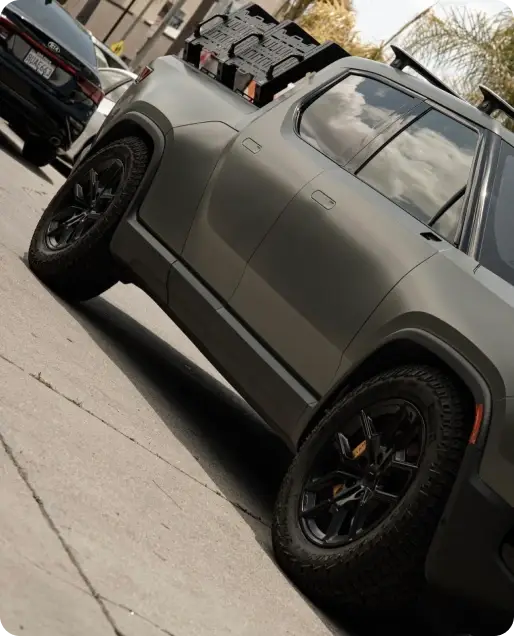
Gloss. The default. Optically clear, slightly deepens the existing paint, effectively invisible when the edges are wrapped.
Satin or matte. Converts gloss paint to a flat finish while protecting it. A reversible way to change the character of a car without a respray.
Colored. A full color change that also self-heals and absorbs stone damage — more expensive than vinyl, and doing considerably more.
All three are urethane with the same self-healing top coat. The finish is a cosmetic choice, not a protection compromise.
Flagship films carry a ten-year manufacturer warranty. What that warranty actually covers is worth reading before you buy, because the headline number hides the detail.
Covered: yellowing, cracking, blistering, bubbling and delamination — the ways film fails on its own. If the material discolors or lifts within the term, it is replaced.
Not covered: impact damage that punches through the film. That is not a defect, it is the film doing its job. A stone that tears the material has stopped a stone that would otherwise have chipped your paint, and the fix is re-wrapping that panel.
Warranties are registered against the vehicle by the installing shop, which is why film fitted by an unregistered installer often turns out to have no coverage at all. Ask for confirmation that yours has been registered, and keep it with the service records — on most products the coverage transfers when you sell the car, which is a small but real addition to its value.
Hand wash where possible. Two buckets, a clean mitt, and keep a pressure washer lance more than a foot from any edge. Automatic brush washes are the fastest way to lift film that was fitted perfectly.
Avoid abrasive polishes, cutting compounds and solvent-based cleaners on filmed panels. Standard pH-neutral car shampoo is fine. Tar and bug removers should be checked against the film manufacturer’s list first.
Look along the panel edges once or twice a year in raking light. An edge that has begun to lift can usually be re-set in minutes if it is caught early, and becomes a re-wrap if it is left for a season.
Film is oversold often enough that it is worth stating the limits plainly.
It is not armor. It absorbs stone chips and light scratches. A deliberate key, a curbed bumper or a car park collision will go straight through it.
It does not repair. Anything already on your paint gets sealed underneath and stays visible for a decade. Correction happens before film, or not at all.
It is not permanent. Ten years is the realistic horizon on a well-maintained car in Los Angeles sun. Film is a consumable protecting a non-consumable.
It does not make washing optional. The top coat is hydrophobic and the car stays cleaner for longer, but a filmed car left dirty for months still collects contamination that etches into the film’s surface.
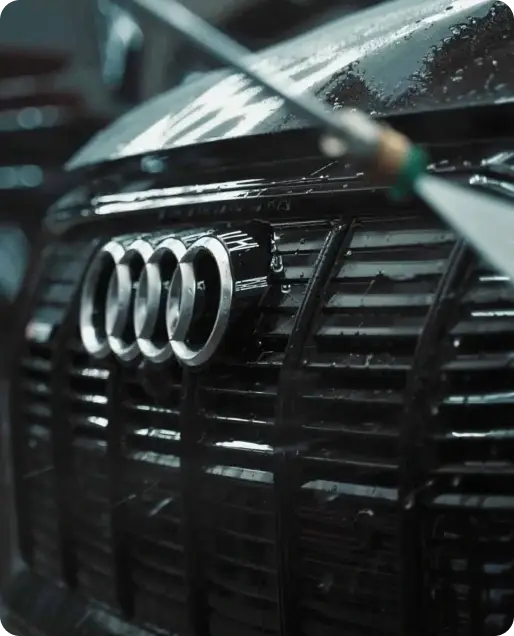
Our bay is at 5035 Hollywood Blvd, Los Angeles, CA 90027, in Los Feliz. Film is fitted indoors for a specific reason: any airborne dust that settles between the film and your paint during application is trapped there permanently. Outdoor and mobile fitting cannot control that.
We regularly take cars from Hollywood, West Hollywood, Los Feliz, Silver Lake, Beverly Hills, Koreatown, Glendale, Burbank, Downtown Los Angeles and Century City. Most are within twenty minutes of the shop.
Call (323) 942-4919 or send the year, make and model through the quote form and we will come back with a specific figure rather than a range.
A partial front is usually a single day. A full front is one to two days. Full body is commonly three to five days. The variable is preparation rather than fitting — a car needing significant paint correction before the film goes on takes longer than a new one.
Yes, both are included in our full front. Headlamp covers are one of the highest-value panels on a modern car because LED and matrix units are expensive to replace once they are sandblasted, and mirror faces take direct spray at freeway speed.
The coating has to be removed from any panel receiving film, because film will not bond reliably to a coated surface. We machine-polish the coating off those panels first. Coating applied on top of the film afterwards is fine and is what we normally recommend.
Fresh paint needs to outgas before it is covered, usually around thirty days depending on the bodyshop’s process. Film applied too soon can trap solvents and cause the paint to fail. We will ask when the work was done and wait if it is recent.
Yes, using a matte film so the finish is preserved. Fitting gloss film over factory matte paint would turn it glossy, which is almost never what the owner wants. Matte paint also cannot be machine-corrected the way gloss can, so preparation is handled differently.
Leave the car unwashed for the period we specify at handover, usually about a week, while the adhesive fully bonds. Avoid pressure washing directly into edges at close range, and skip automatic brush washes entirely. Small moisture pockets under fresh film clear on their own.
Yes, and it is one of the most straightforward cases for film. Chip damage is chargeable at handback, film absorbs it, and professional removal leaves the original paint intact. Tell us the lease end date and we will plan the removal around it.
Motorcycles and commercial vehicles, yes. Larger recreational vehicles are quoted individually because panel sizes fall outside standard pattern libraries and the work is priced by the hour rather than by package.
Film will not repair existing damage and will seal it in place, so we assess the paint first. Minor chips can often be touched in and levelled before fitting. Where damage is extensive, paint repair first is the honest recommendation even though it costs more.
Yes. We inspect lifting edges, re-set them where possible and advise on whether individual panels are worth re-wrapping. Whether a manufacturer warranty still applies depends on who installed it and whether it was registered, which we will help you check.
Send us the year, make and model and the coverage you have in mind. You will get a specific figure for your car, not a price band.