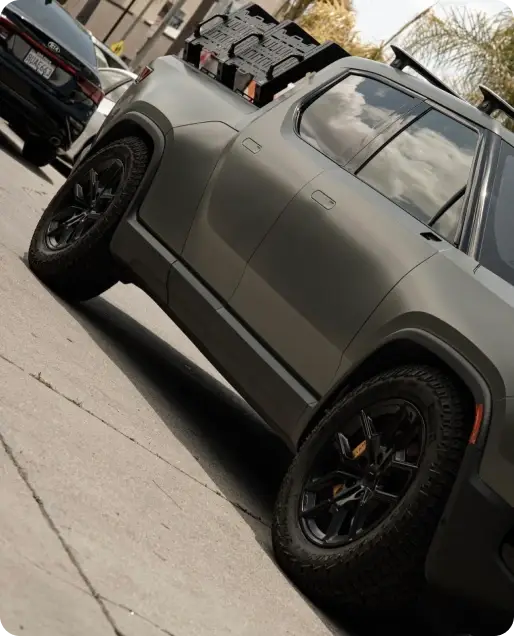
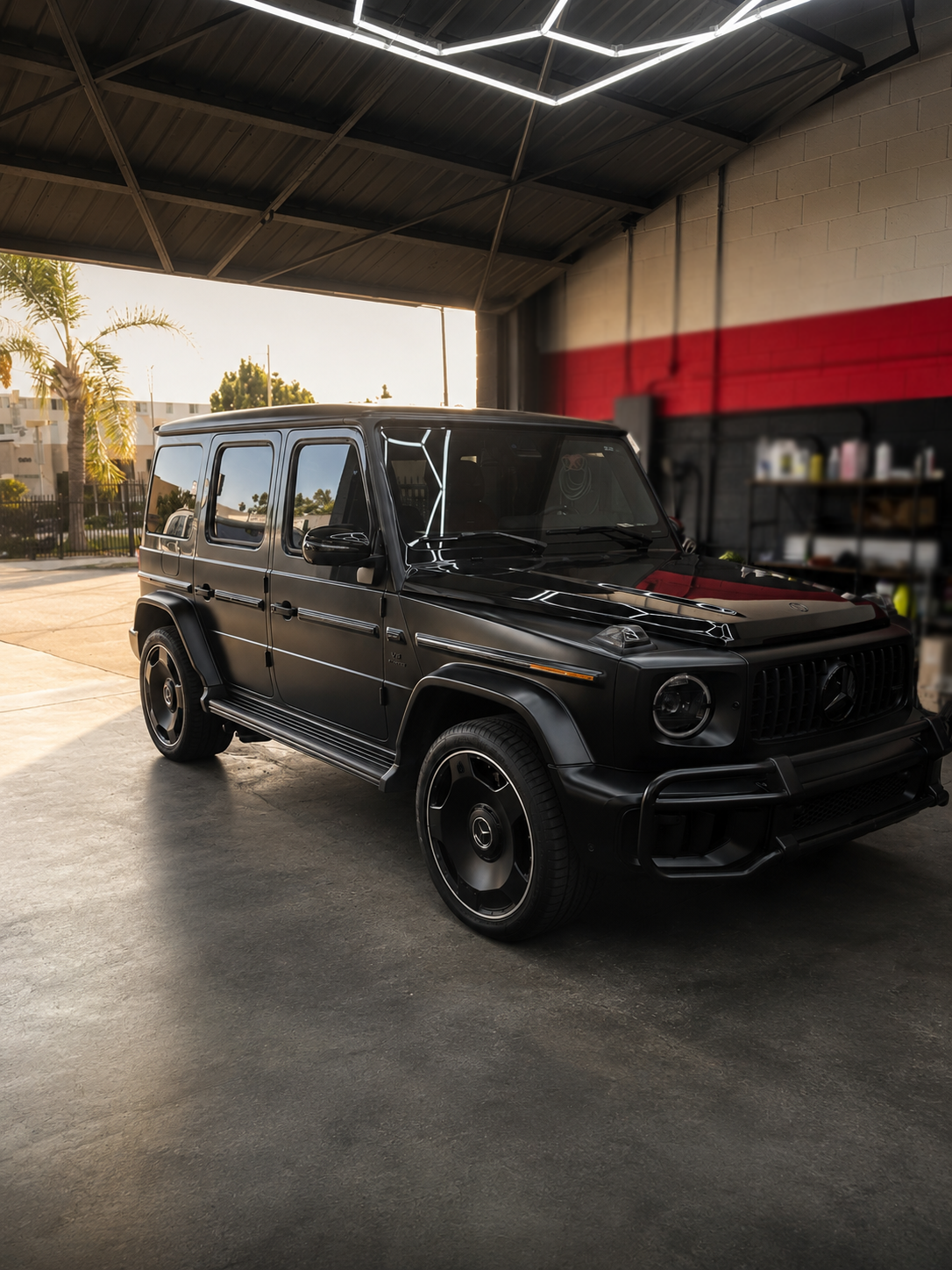
Full color changes, partial wraps, and chrome delete in gloss or satin.
Cast vinyl over factory paint, removable years later without damage.
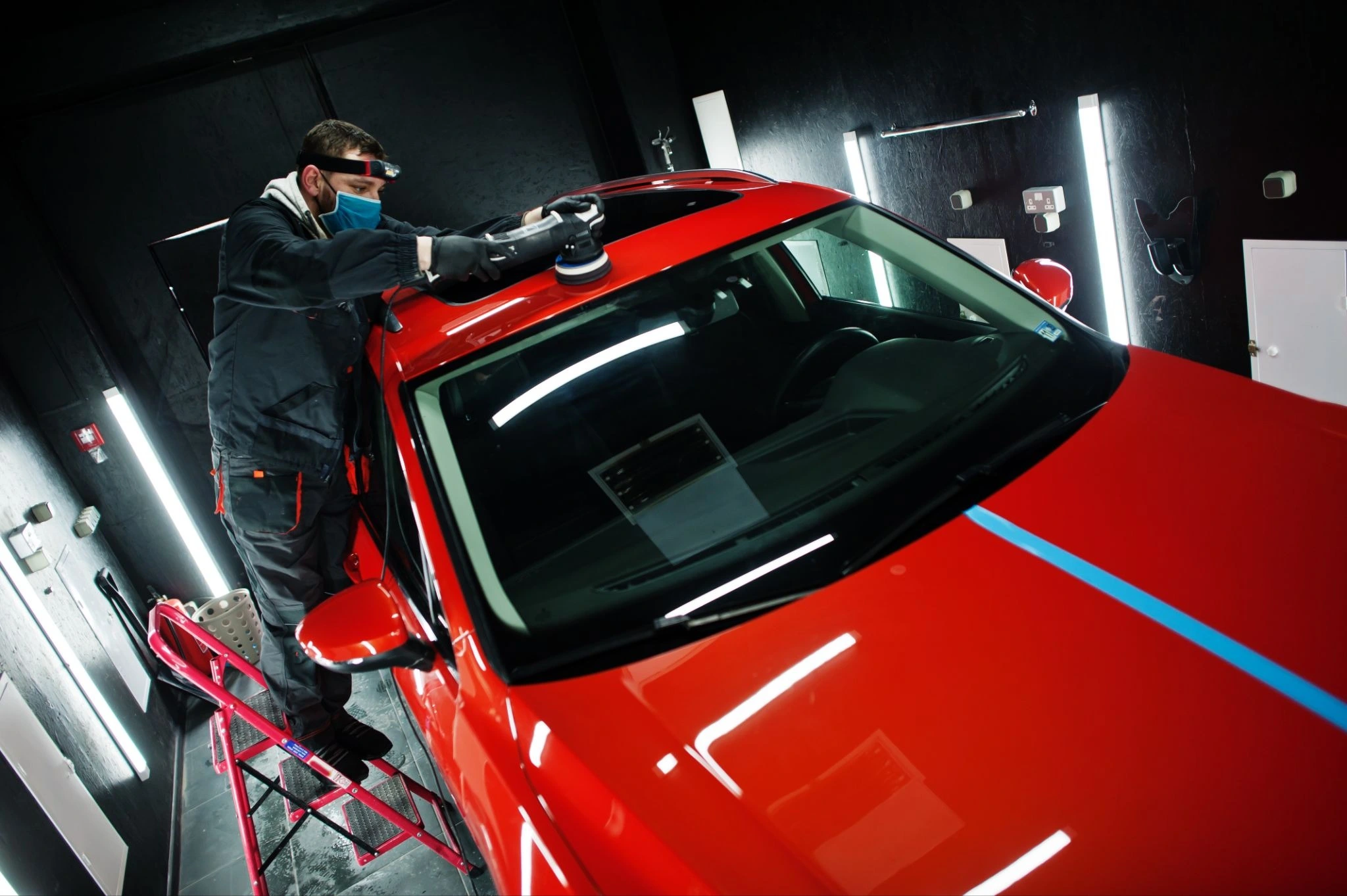
Fitted indoors in Los Feliz on a dust-controlled bench.
A wrap is cast vinyl film applied over your existing paint. It changes the color completely, protects the paint underneath from ultraviolet fade, and removes cleanly years later with the original finish intact. That reversibility is the main reason people choose it over a respray.
A respray is permanent, and a color change on the logbook affects resale.
A wrap sits over the factory paint and comes off when you want it to.
The paint underneath spends those years shielded from ultraviolet, so it is usually in better condition than the panels around it.
It is also faster. Days rather than weeks, and no bodyshop booking to wait for.
Most people start smaller than they expect to.
Window surrounds, grille, badges, mirror caps and handles.
The best ratio of visual change to money spent on any car.
Usually a single day, and fully reversible.
Roof, bonnet, mirrors or a single accent panel.
Changes the character of a car without committing to a full color change.
Popular as a first step before a full wrap.
Every visible painted panel in a new color.
Edges wrapped and trim removed so no original color shows at the gaps.
Three to five days depending on the bodywork.
Cut vinyl lettering, partial livery or full commercial wraps.
Repeatable across a fleet so the tenth van matches the first.
Scheduled in batches so the operation keeps running.
This is the difference that separates a wrap that lasts from one that fails.
Calendered vinyl is cheaper and shrinks as it ages, pulling back from edges and leaving a visible line of original paint.
Cast vinyl is dimensionally stable, conforms to curves properly and does not shrink.
Any shop quoting a full wrap unusually cheaply is quoting calendered material. It will look fine for a year.
A wrap follows the surface underneath exactly. Preparation is most of the job.
Existing damage recorded. Vinyl does not hide dents, and a bad panel shows through as a bad wrap.
Full wash, clay and panel wipe. Any contamination left behind stops the vinyl bonding.
Handles, badges, lights and trim removed so vinyl wraps into the gaps instead of stopping at them.
Vinyl laid, heated and conformed to the panel. This is where skill separates results.
Every edge and recess heated to set the vinyl’s memory so it cannot lift or pull back later.
Gloss. Closest to paint, and the most forgiving of a less than perfect panel underneath.
Satin. The most requested finish. A soft sheen that reads expensive on almost any color.
Matte. Completely flat. Striking, and the least forgiving of surface imperfections.
Metallic and pearl. Flake and depth in the film itself.
Color shift. Changes hue with viewing angle. Nothing in paint does this affordably.
Textured. Carbon, brushed metal and similar, usually as accents rather than full coverage.
Quality cast vinyl carries a manufacturer warranty, typically several years.
Vinyl life in Los Angeles is around three to five years, and sun is what ends it.
Upward-facing panels go first. It is normal for a roof to age before the doors.
Automatic brushes catch vinyl edges and lift them. Hand wash, two buckets.
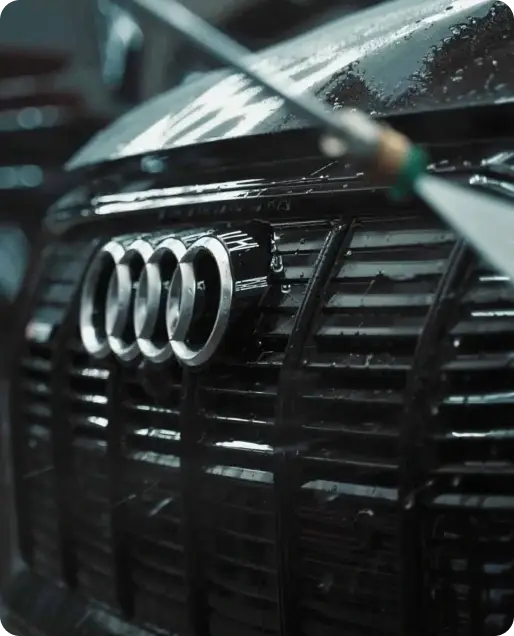
Keep a pressure lance a foot away from any seam. High pressure gets under vinyl.
Shade or a garage where you can. Sun is what ends a wrap’s life, not mileage.
It will not hide damage. Vinyl follows the surface. Dents and rough repairs show through clearly.
It will not stick to failing paint. If the clear coat is peeling, vinyl pulls it off on removal.
It is not paint protection film. Wrap vinyl does not self-heal and is thinner. Different product, different job.
It is not permanent. Three to five years here. Plan for it as a consumable.
Our bay is at 5035 Hollywood Blvd, Los Angeles, CA 90027, in Los Feliz.
Wraps are fitted indoors. Dust or wind during application is trapped under the vinyl.
Cars come from Hollywood, West Hollywood, Burbank, Glendale, Silver Lake and Downtown.
Call (323) 942-4919 with the model and the finish you have in mind.
Three to five days on most cars, longer on complex bodywork. We give you the number of days with the quote, not after the car is stripped.
Not factory paint in good condition. Professional removal leaves it intact and usually better preserved than the exposed panels around it.
Sometimes, but aftermarket paint bonds differently and can lift on removal. We assess it first and tell you the risk honestly.
Yes, gloss black roofs are one of the most common partial jobs. It is a single day and changes the car noticeably.
Generally yes, since a color change is a modification. Check your policy before booking rather than after.
Individual panels can be re-wrapped without redoing the car. Keeping the batch details makes matching easier later.
Yes, and it is a good use case. It comes off before handback with the original color untouched.
Leave it about a week for the adhesive to set fully. After that hand washing is fine and brush washes are not.
Both. Commercial fleets are scheduled in batches so vehicles stay on the road.
Yes, if they are done close together. Vinyl varies between production batches, so matched vehicles should be booked in one run.
Send the year, make and model with what you want done.
You get a figure for your car, not a price band.